How to Choose the Right Studio Monitor for Your Room
Nearfield vs. Midfield: Getting the Size Right First
The most common and expensive mistake in monitor purchasing is buying a monitor sized for the wrong listening distance. Every EVE Audio monitor in this collection is designed for a specific working distance, and matching that distance to your room is the starting point for every other decision.
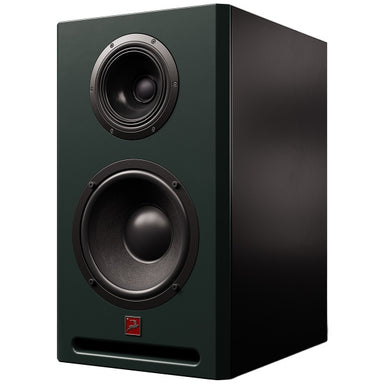
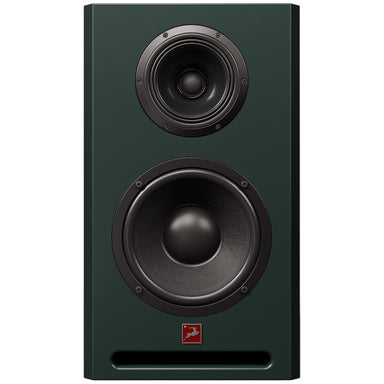
Nearfield monitors are designed for listening distances of 1 to 1.5 meters from the listening position. At that distance, the direct sound from the monitor reaches your ears before room reflections do, which reduces the influence of your room's acoustic problems on what you hear. The EVE Audio SC205 with a 5-inch woofer and the SC207 with a 6.5-inch woofer are nearfield monitors suited to home studios, project studios, and any room without significant acoustic treatment. The SC208 with an 8-inch woofer extends into the lower nearfield range with more low-frequency extension for mix rooms requiring accurate reproduction below 45 Hz.
Midfield monitors are designed for listening distances of 1.5 to 3 meters in acoustically treated rooms. The EVE Audio SC305, SC307, and SC308 are three-way midfield designs. Three-way architecture dedicates a separate driver to the midrange frequencies rather than asking the woofer to handle both bass and mids simultaneously. This produces cleaner midrange reproduction at higher SPL levels, which is why midfield monitors are standard in professional mix rooms and mastering suites.
AMT Tweeters: What Makes EVE Audio Different
Every EVE Audio monitor uses an AMT (Air Motion Transformer) tweeter. Most studio monitors use dome tweeters, which move a dome forward and backward to displace air. As frequency increases above 15 kHz, dome mass limits accuracy, introducing distortion and resonance at the upper edge of the audible range.
AMT tweeters move air by squeezing and expanding a pleated diaphragm, generating more air movement per unit of diaphragm displacement than a dome. The result is a tweeter extending beyond 40 kHz with total harmonic distortion below 0.1% at typical monitoring levels. For mixing decisions involving high-frequency EQ, reverb tails, and stereo imaging, the additional resolution that AMT tweeters provide in the 10 to 20 kHz range is audible and directly useful.
DSP Calibration: Compensating for Room Placement
Every EVE Audio monitor in this collection includes onboard DSP calibration controls. These allow engineers to compensate for the acoustic effects of specific room placements without external EQ hardware.
The low-shelf control is adjustable from -6 dB to +3 dB at 120 Hz and compensates for boundary reinforcement, the bass buildup that occurs when monitors sit near walls or on a desk surface. A mid-dip control at 160 Hz addresses the buildup common in small rooms between 100 Hz and 200 Hz. A high-shelf control adjusts the AMT tweeter's brightness to account for room absorption at high frequencies.
Setting these correctly requires either measurement software like Room EQ Wizard with a calibrated microphone, or an acoustic consultant. EVE Audio's companion app guides engineers through the process with a structured interface.
What to Expect When You First Start Mixing on Reference Monitors
A flat-response reference monitor will make your mixes sound worse before they sound better. Recordings will feel harsher, brighter, and more exposed than they did on your previous speakers. That is the monitor working correctly. Consumer speakers were making your decisions sound better than they were.
Over time, familiarity with how your EVE Audio monitors represent audio allows you to make mix decisions that translate to headphones, car speakers, and consumer playback systems accurately. That translation is the entire point of reference monitoring.
Also in this collection: All audio interfaces | AD/DA converters | Master clocks



 Save $361.00